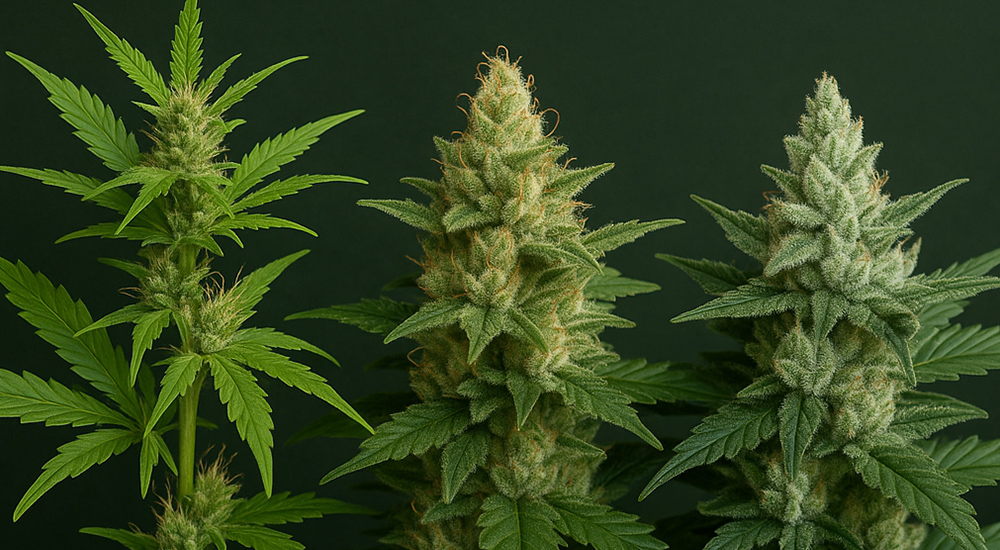
Cannabis has a remarkably diverse botanical profile, and traditional classifications have long helped organize that diversity. Among the most recognized terms in the industry, Indica vs sativa describes two broad categories historically associated with different plant structures, growth patterns, and characteristics. While modern cannabis genetics have become increasingly complex, these classifications continue to provide consumers with a familiar framework for understanding varieties and exploring the wider cannabis market.
In This Article
- The Origins of Traditional Cannabis Categories
- Comparing Plant Structure and Growth
- Flowering Characteristics Across Classifications
- Aroma and Terpene Diversity
- The Importance of Cannabinoid Profiles
- The Growing Role of Hybrid Genetics
- Why Traditional Labels Still Matter
- A More Complete Approach to Cannabis Classification
- Conclusion
The Origins of Traditional Cannabis Categories
The distinction between indica and sativa developed from botanical descriptions of cannabis plants with different physical characteristics. Over time, these terms became widely adopted within cultivation, product development, and consumer discussions.
Traditional indica plants are generally associated with shorter, compact structures and broader leaves. Sativa plants are commonly characterized by taller growth, narrower leaves, and a more elongated appearance. These differences provide an accessible way to understand the basic botanical diversity found within cannabis.
Comparing Plant Structure and Growth
Plant architecture is one of the clearest traditional differences between the two classifications. Indica-associated plants typically develop dense foliage and compact branching patterns. Their shorter stature can make them suitable for cultivation environments where available vertical space is limited.
Sativa-associated plants generally demonstrate more vertical growth and longer spacing between branches. Their narrow leaves and extended structure create a visibly different appearance. Environmental conditions, genetics, and cultivation techniques can all influence these traits.
Flowering Characteristics Across Classifications
Flowering behavior is another characteristic historically used when distinguishing cannabis categories. Traditional indica genetics are often linked with comparatively shorter flowering periods, while sativa genetics have commonly been associated with longer flowering cycles.
For cultivators, flowering characteristics can influence production planning and environmental management. These differences also contribute to the distinct cultivation profiles associated with traditional cannabis classifications.
Aroma and Terpene Diversity
Cannabis aroma cannot be explained by indica or sativa classification alone. Terpenes play a major role in creating the scent and flavor profiles associated with individual varieties.
Commonly discussed compounds include limonene, myrcene, pinene, and caryophyllene. Their presence and concentration can vary considerably between cultivars. As a result, two varieties belonging to the same traditional category may offer entirely different aromatic experiences.
This diversity is one reason modern cannabis consumers increasingly examine terpene information when learning about individual products.
The Importance of Cannabinoid Profiles
Cannabinoids provide another measurable dimension of cannabis classification. THC and CBD are among the most widely recognized cannabinoids, but cannabis contains many other naturally occurring compounds.
The concentration and balance of cannabinoids can differ between varieties regardless of whether they are traditionally described as indica or sativa. Examining cannabinoid information therefore adds greater detail to the broad botanical classification.
The Growing Role of Hybrid Genetics
Modern cannabis breeding has expanded the traditional classification system through extensive hybridization. Hybrid varieties combine genetic characteristics from different cannabis lineages and can display a wide range of physical and chemical traits.
Some hybrids may lean toward characteristics traditionally associated with indica, while others may reflect more sativa-oriented traits. Balanced combinations are also common, creating a broad spectrum of possibilities for cultivators and consumers.
Why Traditional Labels Still Matter
Although cannabis classification has become more sophisticated, indica and sativa terminology remains useful because it offers an accessible starting point. New consumers can use these familiar categories to understand broad botanical differences before exploring more detailed information.
For experienced shoppers, the labels can function as one part of a larger product profile that includes genetics, cannabinoid concentrations, terpene composition, cultivation methods, and flower characteristics.
A More Complete Approach to Cannabis Classification
Modern cannabis selection increasingly focuses on several measurable characteristics rather than relying on a single label. Product descriptions, cannabinoid percentages, terpene profiles, cultivar genetics, aroma, appearance, and cultivation information can collectively provide a richer understanding of a variety.
This approach recognizes the complexity of cannabis while preserving the usefulness of traditional terminology. It also gives consumers more information when comparing different varieties and product profiles.
Conclusion
Indica and sativa remain important traditional classifications within the cannabis industry, offering a straightforward way to understand broad differences in plant structure, growth patterns, and cultivation characteristics. Indica-associated plants are generally more compact, while sativa-associated plants tend to develop taller and more elongated structures. Modern hybrid genetics have expanded this spectrum considerably, making cannabis classification more diverse than ever. By considering traditional categories alongside cannabinoids, terpenes, genetics, and cultivation traits, consumers can gain a clearer and more complete understanding of today’s cannabis varieties.
Key Takeaways
- Indica and sativa are traditional classifications that describe broad categories of cannabis plants based on their physical characteristics and growth patterns.
- Indica plants are typically shorter and have broader leaves, while sativa plants are characterized by taller growth and narrower leaves.
- Traditional indica genetics are often linked with shorter flowering periods, while sativa genetics are associated with longer flowering cycles.
- Terpenes play a significant role in the aroma and flavor profiles of cannabis, leading to wide variation in scent among different varieties, even within the same classification.
- Modern cannabis breeding has led to the development of hybrids that combine genetic traits from both indica and sativa, creating a diverse array of characteristics.
- While cannabis classification has become more complex, the traditional terms still provide an accessible way for consumers to understand broad differences before delving into detailed information.
